First fat is bad. And now everyone is acting as if butter and bacon are the cure all for everything? Yesterday carbs would kill you and now carbs, as well as gluten, fructose and “toxins” are ripping apart your insides without you even being aware?
As a follower of Metabolic Effect you have been learning that this idea that there is one way is really a flawed philosophy. There are really no such things as bad foods or good foods. There are only the foods that work for you and the ones that don’t.
It is really all about finding what works for you. Admittedly, that concept can be unsettling for many people. It is human nature to crave certainty. We love rules and feel secure when there is a clear black and white distinction between things.
The problem is nothing about the way the body works is simplistic or black and white. It is all shades of grey.
There are three ways you can make sense of the grey. Three ways to know that what you are doing is working to better your health, fitness and body shape or not. They are:
- Your HEC is in check
- You are losing fat and changing your shape in the way you desire
- Your blood labs are getting healthier
HEC In Check
HEC is an acronym for hunger, energy and cravings. These sensations are biofeedback to you that your metabolism is in a balanced state. Most diets teach one-size-fits-all restrictive rules. Instead of helping you learn about your unique metabolic expression, these diet approaches work against your physiology making it virtually impossible to succeed because they keep HEC out of check. A plan that works is one that keeps your HEC in check.
Fat Loss
When you are losing fat it is a little different than weight loss. Fat loss means you are losing fat and keeping muscle. This makes it so instead of going from a large apple or pear shape to a smaller more mushy apple or pear shape, you are able to morph into a tighter more fit hourglass or V-shape. If you can accomplish this, and keep HEC in check, you know you can make it last.
Blood Labs
It is great to feel and look good, but the right approach for you will also improve your health. You will know you have achieved this through looking at blood labs. While most of the labs you should pay attention to are done by your physician, there are a few you may want to request. Here are the ones we would recommend having done on a regular basis.
- A Metabolic Chemistry Panel that includes lipids (cholesterol & triglycerides)
- A Complete Blood Count (CBC)
- 25-Hydroxy Vitamin D
- Hemoglobin A1c
- hsCRP
- Homocysteine
- Insulin
- TSH
- A 24 Hour Salivary Cortisol Profile
All of these tests except the 24 hour salivary cortisol, can be done through your standard doctor. Here is why you need them.
The chemistry panel and lipids covers the basics. It will give you a good idea of the way your body is processing and burning fat (triglycerides) and sugar (fasting glucose). It also gives you a good idea of how your liver and kidney are functioning.
The CBC rules out many things, but most importantly it can give you a good indication of several different nutrient concerns including iron and the b-vitamins.
The vitamin D test is one I see as critical. Optimal levels are between 50-100ng/ml and very few people achieve these levels. We now know that vitamin D is more than a vitamin but actually a vital hormone. It influences the function of other hormones as well, most notably thyroid and insulin.
hsCRP is a measure of inflammation. hsCRP levels should be as low as possible. Understanding these levels helps you understand your risk of heart disease among other things. Optimal is less than 1, but lower is better.
Hemoglobin A1c tells you about how your blood sugar levels have been the previous three months. Maintaining appropriate blood sugar is a critical step for health and fat loss. Optimal levels are between 4.1 to 5.7%
Homocysteine is a compound that does damage to tissues in the body including the lining of blood vessels. When high it indicates a need for the b-vitamins folate and b12. Optimal is between 7 & 10.
Insulin is a major fat storing hormone and when out of control and too high increases the risk for many diseases. Knowing your levels is very important. Optimal levels are less than 10.
TSH or thyroid stimulating hormone is a screening test for thyroid. When high, it indicates a slow metabolism and possibly hypothyroid condition. This is important to know as thyroid issues, even minor ones, can slow or halt weight loss and increase risk of disease. Optimal levels are between 2 & 4
Finally a 24 hour cortisol test can tell you how your body is dealing with stress through the day. A normal cortisol rhythm starts off high and ends low. Many people have the exact opposite situation showing that stress is having a negative impact on their health and metabolism. At the Metabolic Effect clinic we use a test called the Adrenal Stress Index or ASI.
I share this with you so you can make sure that you can understand exactly what is required to assess your health and fitness.
Thursday, March 5, 2015
Have Your Doctor Run These 9 Tests!
By: Jade Teta of Metabolic Effect

Thursday, April 17, 2014
Are detox diets scams?
Are detox diets scams?
By: Jade Teta
I got asked this question the other day by a family member. They said that a friend of theirs was selling some supplement that only needed to be taken twice per day.
The supplement was specially designed to “flush toxins” and burn fat because “toxins” are the real reason people store fat, not calories.
Let me see if I can put this in perspective for you so you can understand how something like this sounds to my ears.
Imagine you are an expert mechanic and one of your clients tells you that a friend of theirs said all they need to do is add a special bottle of barbecue sauce to their fuel tank to triple the fuel efficiency of their car.
As silly as it sounds, this is what some of this detoxification and fat loss rhetoric sounds like to those of us who have expertise in the natural health and weight loss fields.
How to really detox
First of all, the vast majority of the “toxins” the body has to deal with day to day are internally generated. And taking some sugar laden product to help you detox will likely, you guessed it, increase the body’s internally generated body burden.
Second, detoxification is one of the most natural processes of the body. It does it day in a day out and does not require any help from some magical elixir that costs $40 every single month.
Give the body plenty of fiber so the bowels move regularly, eat adequate protein so your detoxification enzymes can be made and get adequate sleep, movement, and rest time. Do that and you have won the detox battle.
A real detox requires one other thing, but it is not something you add in. It is something you take away. For the body to adequately detox it needs times away from food especially junk food. Simply not eating, or eating only easy to digest liquid based foods, for a period of time is one of the best detox medicine you can "buy". Eating lightly shifts more of the body's resources to recovery, repair and regeneration versus digestion and assimilation.
So, a good detox comes from eating lightly, dramatically increasing fruit and vegetable intake and drinking plenty of water. Oh, and relaxing movement and sweating aid the process along greatly.
In other words, the best detox on the market is a bucket load of produce, a gallon of water and time resting instead of eating.
Sorry, I know it is not quite as sexy as a magical rain forest juice that you sprinkle on your head, turn counter clockwise and then have a perfectly clean liver.
A quick spring detox
Since I know it is going to come up now that spring is here, let me give you one of the best detoxes you can do and all it takes is a long weekend. Start thursday night and here is what you need:
- Make up several big jugs of lemon water. Add some ginger if you have a juicer.
- Go to the store and buy a ton of celery, cucumbers, and any other vegetables
- Add these veggies into a chicken broth and cook until the veggies are soft.
- Set aside 4 liters of water a day.
Now all day Friday, Saturday and Sunday do the following:
- Drink 1-2 liters of your lemon ginger tea
- Eat three large servings of the vegetable soup
- Drink 4 liters of water a day.
- Eat nothing else.
- Take a few hot baths or do a sauna to make yourself sweat.
- Go for as many long, but non-strenuous walks as you can
- Sleep as much as you can and rest
- Do not do any strenuous exercise
Simple, powerful and effective detox. And you are likely to lose 3-5 pounds of water in the process. Repeat this for 2-4 weekends if you want and you have a perfect healthy, cheap detox minus the magical elixir.
Wednesday, January 8, 2014
Healthy Snack Ideas For A Fit 2014!
Let's get 2014 started right with some healthy snack ideas!
-
1 apple, 1 cup skim milk
-
½ avocado & 2 oz 1% cottage cheese
-
3oz of light tuna on 6 whole wheat crackers
-
Lentil spread on pita:
o
1
(15-ounce) can lentils, rinsed and drained
o
1
tablespoon lemon juice
o
1/4
teaspoon salt
o
1/4
teaspoon pepper
o
2
tablespoons sunflower seeds
o
1
celery stalk, finely diced
o
1
scallion, finely diced
o
2
tablespoons chopped fresh parsley
o
2
pitas, halved
1.
Combine lentils, lemon juice, salt, and pepper in a blender; process until
smooth.
2.
Stir in sunflower seeds, celery, scallions, and parsley.
3.
Microwave pita at HIGH 1 minute. Serve with spread.
- Shrimp Snack:
· 1 tablespoon fat-free plain Greek
yogurt
· 1/2 teaspoon fresh lime juice
· 1/4 teaspoon jalapeño sauce
· 1/4 avocado, chopped
· 1 crisp rye flatbread
· 5 cooked large shrimp
Chopped fresh parsley and cracked black pepper (for
garnish) Stir yogurt, lime juice, sauce, and avocado; spread on cracker. Top
with shrimp, parsley, and pepper.
- Berry Smootie
· 1 cup frozen mixed berries
(strawberries, blueberries, raspberries, and blackberries)
· 1/2 cup water
· 1/4 cup low-fat plain yogurt
· 1 teaspoon honey
· 1 tablespoon unsweetened soy protein
powder
o Combine ingredients in a blender.
Purée until smooth; drink immediately.
-
Warm pear w/ cinnamon ricotta:
o
1
small pear, halved and cored
o
1/4
cup part-skim ricotta cheese
o
1/4
teaspoon ground cinnamon
1.
Preheat broiler or toaster oven. Place pear on a baking sheet; broil 10 to 12
minutes until tender.
2.
Combine ricotta and cinnamon in a small bowl. Top warm pear with ricotta
mixture.
- 1 cup edamame (soy beans)
- Cauliflower w/ white bean dip:
· 4 tablespoons extra-virgin olive
oil, divided
· 2 whole garlic heads
· 2 (16-ounce) cans canellini beans or
other white beans
· 1/4 cup fresh lemon juice
· 1/4 teaspoon salt
· 1/4 teaspoon white pepper
· 1/4 cup fresh flat-leaf parsley
leaves for garnish
1.
Preheat the oven to 375°.
2.
Cut the top third of garlic heads off so tops of cloves are exposed. Place
heads, unpeeled, in ovenproof dish and drizzle with 1 tablespoon oil. Cover with
aluminum foil; bake 30 minutes.
3.
Uncover and bake until the garlic cloves are soft and golden brown, another
30–40 minutes. (Make ahead and store in an airtight container in the
refrigerator for up to 5 days.)
4.
In a food processor, combine the beans, roasted garlic, remaining 3 tablespoons
oil, and lemon juice and process until smooth. Add the salt and white pepper.
This will keep in an airtight container in the refrigerator for up to 3 days.
- Luna protein bar
- Veggie Tostada
· Cooking spray
· 2 cups sliced mushrooms
· 2 small zucchini, sliced
· 1 large red bell pepper, chopped
· 4 BASIC TOSTADAS
Place a medium
nonstick skillet coated with cooking spray over medium-high heat until hot. Add
mushrooms, zucchini, and bell pepper to pan. Sauté 3 to 5 minutes or until
vegetables are tender. Spoon about 3/4 cup vegetable mixture over black bean
mixture on each tostada. Top with lettuce, salsa, and cheese.
- 1 hard boiled egg, 15 asparagus
spears
- protein hot chocolate
· 1 scoop plain or vanilla whey protein powder into a mug
· 1 Tbsp raw unsweetened cocoa powder into the mug
· 2-3 Tbsp cold water into the mug. Mix into a paste and let sit for a few minutes.
· Heat 1/4 cup full fat canned coconut milk in separate glass in microwave (1 min) and slowly mix into mug with the paste stirring the whole time.
· Fill the rest of the mug with hot water, stirring the whole time.
· Stir in 1 Tbsp honey
- Spiced green tea smoothie:
· 3/4 cup strong green tea, chilled
· 1/8 teaspoon cayenne pepper
· Juice of 1 lemon (2-3 TBSP)
· 2 teaspoons agave nectar
· 1 small pear, skin on, cut into
pieces
· 2 tablespoons fat-free plain yogurt
· 6-8 ice cubes
Put all ingredients in blender. Blend until smooth.
Drink cold.
Friday, November 8, 2013
The Beginner’s Guide to Intermittent Fasting
By Steve Kamb
“…But Tony the Tiger tells us that breakfast is the most important meal of the day!” This rule has become so commonplace throughout the health and fitness community that it’s readily accepted as fact:
“Want to lose weight? Make sure you start off with a healthy breakfast, so you can get that metabolism firing first thing in the morning! Eat breakfast like a king, lunch like a prince, and dinner like a pauper.”
“Want to lose more weight? Make sure you eat six small meals throughout the day so your metabolism stays operating at maximum capacity all day long”.
There are even studies that show those that eat earlier in the day lose more weight than those who ate later in the day or skipped a meal. So, eat breakfast to lose weight and obtain optimal health. Case closed…right?
Maybe you’re not getting the whole story. As skeptics, what we need to ask: what if there’s science and research that promotes SKIPPING BREAKFAST (the horror! blasphemy!) for optimum efficiency, maximum muscle retention, and body fat loss?
After firmly being on “Team Breakfast” for 28 years of my life, I’ve skipped breakfast for the past three months and might never go back to eating it. I want to share with you a concept about skipping breakfast (and other meals), and how your health will benefit as a result. . This is a topic that is very controversial, as it turns a LOT of conventional wisdom on its head. This is why this article is filled with more sources and citations than Jim Carrey’s glove compartment.
What is Intermittent Fasting?
Intermittent fasting is not a diet, but rather a dieting pattern. In simpler terms: it’s making a conscious decision to skip certain meals. By fasting and then feasting on purpose, intermittent fasting means eating your calories during a specific window of the day, and choosing not to eat food during the rest. Now, there are a few different ways to take advantage of intermittent fasting:
Now, you might be thinking: “okay, so by skipping a meal, I just eat less than normally overall, and thus I will lose weight, right?” Well, that’s partly true. Yes, by cutting out an entire meal, you are able to eat MORE food during your other meals and still consume a caloric deficit (which is an important for losing weight). However, as we already know that not all calories all created equal, the timing of meals can also influence how your body reacts.
- Regularly eat during a specific time period. For example, only eating from noon-8 PM, essentially skipping breakfast. Some people only eat in a 6-hour window, or even a 4-hour window.
- Skip two meals one day, taking a full 24-hours off from eating. For example, eating on a normal schedule (finishing dinner at 8PM) and then not eating again until 8PM the following day.
How Does Intermittent Fasting Work?
With intermittent fasting, your body operates differently when “feasting” compared to when “fasting”: When you eat a meal, your body spends a few hours processing that food, burning what it can from what you just consumed. Because it has all of this readily available, easy to burn energy in its blood stream (thanks to the food you ate), your body will choose to use that as energy rather than the fat you have stored. This is especially true if you just consumed carbohydrates/sugar, as your body prefers to burn sugar as energy before any other source.
During the “fasted state,” your body doesn’t have a recently consumed meal to use as energy, so it is more likely to pull from the fat stored in your body, rather than the glucose in your blood stream or glycogen in your muscles/liver.
Burning fat = win.
The same goes for working out in a “fasted” state. Without a ready supply of glucose and glycogen to pull from (which has been depleted over the course of your fasted state, and hasn’t yet been replenished with a pre-workout meal), your body is forced to adapt and pull from the only source of energy available to it: the fat stored in your cells!
Why does this work? Your body reacts to energy consumption (eating food) with insulin production. Essentially, the more sensitive your body is to insulin, the more likely you’ll be to use the food you consume efficiently, which can help lead to weight loss and muscle creation. Along with that, your body is most sensitive to insulin following a period of fasting.
Your glycogen (a starch stored in your muscles and liver that your body can burn as fuel when necessary) is depleted during sleep (fasting), and will be depleted even further during training, which can further increase insulin sensitivity. This means that a meal immediately following your workout will be stored most efficiently: mostly as glycogen for muscle stores, burned as energy immediately to help with the recovery process, with minimal amounts stored as fat.
Compare this to a regular day (no intermittent fasting). With insulin sensitivity at normal levels, the carbs and foods consumed will see full glycogen stores, enough glucose in the blood stream, and thus be more likely to get stored as fat. Not only that, but growth hormone is increased during fasted states (both during sleep and after a period of fasting). Combine this increased growth hormone secretion, the decrease in insulin production (and thus increase in insulin sensitivity), and you’re essentially priming your body for muscle growth and fat loss with intermittent fasting.
The less science-y version: Intermittent fasting can help teach your body to use the food it consumes more efficiently. For many different physiological reasons, fasting can help promote weight loss and muscle building when done properly.
Why Does Every Health Book Say “Eat 6 Small Meals a Day”?
There are a few main reasons why diet books recommend six small meals:
Although grounded in seemingly logical principles, the “six meals a day” doesn’t work for the reason you think it would (#1), and really only works for people who struggle with portion control (#2).
- When you eat a meal, your body does have to burn extra calories just to process that meal. So, the theory is that if you eat all day long with small meals, your body is constantly burning extra calories and your metabolism is firing at optimal capacity, right? Well, that’s not true. Whether you eat 2000 calories spread out throughout the day, or 2000 calories in a small window, your body will burn the same number of calories processing the food. So, the whole “keep your metabolism firing at optimum capacity by always eating” sounds good in principle, but reality tells a different story.
- When you eat smaller meals, you’re less likely to overeat during your regular meals. I can definitely see some truth here, especially for people who struggle with portion control or don’t know how much food they should be eating. However, once you educate yourself and take control of your eating, I would argue most people find that eating six times a day is very prohibitive and requires a lot of effort. Along with that, because you’re eating six small meals, I’d argue that you probably never feel “full,” and you might be MORE likely to eat extra calories during each snack.
If we want to think back to the caveman days, we’d have been in serious trouble as a species if we had to eat every three hours. Do you think Joe caveman pulled out his pocket sundial six times a day to consume his equally portioned meals? Hell no! He ate when he could, and his body adapted to still function optimally during the rest of the day. A recent study (highlighted by the New York Times) has done a great job of challenging the “six-meals-a-day” technique for weight loss. Martin from LeanGains points out two important quotes from the study:
“…The premise underlying the present study was that increasing meal frequency would lead to better short-term appetite regulation and increased dietary compliance; furthermore, it was hypothesized that these predicted beneficial effects of increased meal frequency could have resulted from more favorable gut peptide profiles, potentially leading to greater weight loss. Under the conditions described in the present study, all three hypotheses were rejected.”“…We had postulated that increasing meal frequency would enhance the compliance to the energy restricted diet thus leading to greater weight loss, an effect possibly mediated by increased fullness. The present results do not support this hypothesis.”Remember, the type of food you eat matters. Meal frequency is not nearly as important as the quantity and quality of food consumed. This study reached similar conclusions.
Why Intermittent Fasting?
- Because it works. Although we know that not all calories are created equal, caloric restriction plays a central role in weight loss. When you fast (either for 16 hours per day, or 24 hours every few days), you are also making it easier to restrict your caloric intake over the course of the week. This will give your body a chance to lose weight as you’re simply just eating less calories than you were consuming before.
- Because it simplifies your day. Rather than having to prepare, pack, eat, and time your meals every 2-3 hours, you simply skip a meal or two and only worry about eating food in your eating window.
- It requires less time (and potentially money). Rather than having to prepare or purchase three to six meals a day, you only need to prepare two meals. Instead of stopping what you’re doing six times a day to eat, you simply only have to stop to eat twice. Rather than having to do the dishes six times, you only have to do them twice. Rather than having to purchase six meals a day, you only need to purchase two.
- It promotes stronger insulin sensitivity and increased growth hormone secretion, two keys for weight loss and muscle gain. This was already explained in the previous section with relevant sources, but intermittent fasting helps you create a double whammy for weight loss.
What are the Drawbacks of Intermittent Fasting?
In my own experimentation, I have found very few negative side effects with Intermittent fasting. The BIGGEST issue I’ve found, and the biggest concern most people have, is that intermittent fasting will lead to lower energy, focus, and the “holy crap I am hungry” feeling during the fasting period. People are concerned that they will spend all morning being miserable because they haven’t consumed any food, and thus will be miserable at work and ineffective at whatever task it is they are working on.
Yes, the initial transition from EATING ALL THE TIME, to intermittent fasting can be a bit of a jolt to your system. However, once you get through the transition, your body can quickly adapt and learn to function just as well only eating a few times a day: This study explains that in participants after 48-hours of fasting, ”cognitive performance, activity, sleep, and mood are not adversely affected in healthy humans by two days of calorie-deprivation.”
“So why do I feel grouchy when I’m not eating breakfast?” In this nerd’s humble opinion, a good portion of the grumpiness is a result of your eating habits. If you eat every three hours, your body will start to get hungry every three hours as it learns and becomes used to expecting (and receiving) food every three hours. If you eat breakfast every morning, your body is expecting to wake up and eat food.
It turns out, quite a bit of it is mental.Once you retrain your body to NOT expect food all day every day (or first thing in the morning), these side-effects become less of an issue (thanks to a substance our bodies produce called Ghrelin). Think about it in caveman terms again. We certainly found ways to survive during periods of feast and famine, and that remains true today. It actually takes our bodies about 84 hours of fasting before our glucose levels are adversely affected. As we’re talking about small fasts (16-24 hour periods), this doesn’t concern us.
AN IMPORTANT CAVEAT:
Intermittent Fasting can be complex for people who have issues with blood sugar regulation, suffer from hypoglycemia, have diabetes, etc. If you fit into this category, I highly recommend you check with your doctor or dietitian before adjusting your eating schedule. I believe more research needs to be done for these particular cases and thus would recommend you do what works best for YOU
Can I Build Muscle and Gain Weight While Intermittently Fasting?
Absolutely!
In fact, I have been intermittent fasting for the past three months or so while building muscle, with minimal increase to my body fat percentage. I still eat the same number of calories I was consuming before, but instead of eating all day long, I condense all of my calorie consumption into an eight hour window.
This method has been borrowed from one of the best resources on intermittent fasting and muscle building on the internet: Lean Gains. In a different method, my friend Nate Green packed on a crazy amount of muscle while fasting for a full 24 hours on Sundays. I’m not kidding when I say this has revolutionized how I look at muscle building and fat loss. Ultimately, this method flies in the face of the typical “bulk and cut” techniques of overeating to build muscle (along with adding a lot of fat) before cutting calories to lose fat (along with some muscle) and settling down at a higher weight. I prefer this method to the bulk-and-cut technique for a few reasons:
- 11 AM Work out with heavy strength training in a fasted state.
- 12 PM Immediately consume 1/2 of my calories for the day (a regular whole-food meal, followed by a massive Calorie Bomb Shake.)
- 7 PM Consume the second portion of my calories for the day in a big dinner.
- 8 PM – 12 PM the next day: Fast for 16 hours.
- There’s far less of a crazy swing. If you are putting on 30 pounds and then cutting 25 to gain 5 lbs of muscle, your body is going through drastic swings of body mass. Your clothes will fit differently, you’ll have different levels of definition, and your body will wonder what"s going on.
- You’re consuming less food and thus spending less money. Rather than overeating to put on 1 pound of muscle and 4 pounds of fat in a week or two, you’re aiming to eat exactly enough to put on 1 pound of muscle without adding much fat on top of it. Yeah, it’s a delicate balance, but there’s far less swing involved. You are just slowly, steadily, and consistently building muscle and strength over many months.
- There’s never a need to get “vacation-ready”: we all want to look good naked, right? When you are just adding muscle, you don’t need to worry about getting your body ready before by drastically altering your diet (going on a miserable crash diet for a month). I like Anthony Mychal’s technique of never being more than two weeks away. Keep your body fat percentage low, build strength and muscle, and if you happen to notice your body fat creeping up, cut back on the carbs. Within two weeks you should be back at your preferred body fat percentage and can continue the muscle building process.
Does Intermittent Fasting have Different Effects on Men and Women?
Yes, intermittent fasting does affect men and women differently. This article over on Paleo For Women goes extensively into the negative effects of intermittent fasting for women. This article on Mark’s Daily Apple does a fantastic job of breaking down the differences between men and women and how they are affected by intermittent fasting, ultimately explaining:
Long story short: Yes, men and women will have different experiences with intermittent fasting; we’re all unique snowflakes (yep, even you), and your body will be affected by intermittent fasting differently than the person next to you. My best advice? Give it a shot, track your results, and see how things go!
- “One study, which I’ve cited before as evidence of a benefit to fasting, found that while IF improved insulin sensitivity in male subjects, female subjects saw no such improvement. In fact, the glucose tolerance of fasting women actually worsened. Ouch.
- Another study examined the effect of alternate day fasting on blood lipids. Women’s HDL improved and their triglycerides remained stable; men’s HDL remained stable and their triglycerides decreased. Favorable, albeit sex-specific results.
- Later, both obese men and women dropped body fat, body weight, blood pressure, total cholesterol, LDL cholesterol, and triglyercides on a fasting regimen. These people were obese, however, and perimenopausal women were excluded from the study, so the results may not apply to leaner people or women of reproductive age.”
Commonly Asked Questions About Intermittent Fasting
“Won’t I get really hungry?” As explained above, this is generally a result of the habits you have built for your body. If you are constantly eating or always eat the same time of day, your body can actually learn to prepare itself for food by beginning the process of insulin production and preparation for food. After a brief adjustment period, your body can adapt to the fact that it’s only eating a few times a day.
Remember, your body’s physical and cognitive abilities aren’t diminished as a result of fasting. “Where will I get my energy for my workouts? Won’t I be exhausted and not be able to complete my workouts if fasting?” This was a major concern of mine as well. And for my first workout or two, it was very weird to not eat a heavy carb meal before training. However, after a few sessions, I learned that my body could certainly function (and even thrive) during my training sessions despite not eating a pre-workout meal. As Mark’s Daily Apple states:
Fasted training can actually result in better metabolic adaptations (which mean better performance down the line), improved muscle protein synthesis, and a higher anabolic response to post-workout feeding (you’ll earn your meal and make more muscle out of it if you train on an empty stomach).That being said, I’m currently experimenting with a pre-workout BCAA supplement to see the effect it has on muscle creation. So far, so good, though I’m not sold on the necessity of the supplement yet. I’ll keep you posted. “I like the idea of fasted training, but I work a regular 9-5 and can’t train at 11AM. What am I supposed to do?”
Martin from LeanGains lays out a few different options for you, depending on your training schedule. The best advice is to not freak out and overanalyze unless you are an elite athlete concerned with the absolute optimal performance at all time. If you’re just a normal guy or gal looking to drop a few pounds and get stronger, do the best you can. “Won’t fasting cause muscle loss?”
Another big concern of mine, but it turns out…it was unfounded. We’ve been told by the supplement industry that we need to consume 30 g of protein every few hours, as that’s the most amount of protein our body can process at a time. Along with that, we’ve been told that if we don’t eat protein every few hours, our body’s muscle will start to break down to be burned as energy.
Again, NOT TRUE! This study shows that our bodies are quite adept at preserving muscle even when fasting, and it turns out that protein absorption by our body can take place over many many many hours. Protein consumed in a shorter period of time has no difference on the body compared to protein spread throughout the day. “What about my body going into starvation mode from not eating?”
Now, the thought process here is that when we don’t feed ourselves, our bodies assume calories aren’t available and thus choose to store more calories than burning them, eliminating the benefits of weight loss with fasting. Fortunately, this is NOT true. As Martin from LeanGains so eloquently explains (as you can tell, he’s good at this stuff):
“The earliest evidence for lowered metabolic rate in response to fasting occurred after 60 hours (-8% in resting metabolic rate). Other studies show metabolic rate is not impacted until 72-96 hours have passed.Seemingly paradoxical, metabolic rate is actually increased in short-term fasting. For some concrete numbers, studies have shown an increase of 3.6% – 10% after 36-48 hours (Mansell PI, et al, and Zauner C, et al). Epinephrine and norepinephrine (adrenaline/noradrenaline) sharpens the mind and makes us want to move around. Desirable traits that encouraged us to seek for food, or for the hunter to kill his prey, increasing survival. At some point, after several days of no eating, this benefit would confer no benefit to survival and probably would have done more harm than good; instead, an adaptation that favored conservation of energy turned out to be advantageous.”“This sounds crazy, I’m not gonna do it.” That’s cool. Are you losing body fat, building muscle, and getting a clean bill of health from your doctor? If you can say yes to those things, AWESOME. Keep doing what you’re doing, because it’s working. However, if what you’re doing ISN’T working, or you’re not getting the results you were hoping for, why not give it a chance? Hopefully the dozens of studies at least peak your curiosity. Self-experimentation is the best way to determine WHAT methods work for you.
Tips and Tricks about Fasting
Don’t freak out. Stop wondering: “can I fast 15 hours instead of 16?” or “what if I eat an apple during my fasted period, will that ruin everything?” Relax. Your body is a finely tuned piece of machinery and learns to adapt. Everything is not as cut and dry as you think. If you want to eat breakfast one day but not another, that’s okay. If you are going for optimal aesthetic or athletic performance, I can see the need to be more rigid in your discipline, but otherwise… chill out and don’t stress over minutiae.
Expect funny looks. A few weeks back I had a number of friends staying with me, and they were all completely dumbfounded when I told them I didn’t eat breakfast anymore. I tried to explain it to them but received a bunch of blank stares. Breakfast has become so engrained in our culture that NOT eating it sounds crazy. You will get weird looks from those around you…embrace it. Stay busy. If you are just sitting around thinking about how hungry you are, you’ll be more likely to struggle with this. For that reason, I time my fasting periods for maximum efficiency and minimal discomfort:
I don’t have time to think about how hungry I am, because I keep my brain constantly occupied! Zero-calorie beverages are okay. As previously stated, I drink green tea in the morning for my caffeine kick while writing. If you want to drink water, black coffee, or tea during your fasted period, that’s okay. Remember, don’t overthink it – keep things simple! Track your results, listen to your body:
- My first few hours of fasting come after consuming a MONSTER meal, where the last thing I want to think about is eating.
- When I’m sleeping: 8 of my 16 hours are occupied by sleeping. Tough to feel hungry when I’m dreaming about becoming a Jedi.
- When I’m busy: After waking up, 12 hours of my fasting is already done. I spend three hours doing my best work (drinking green tea and listening to PM, which is exactly what I’m doing while writing this article!), and then comes my final hour of fasting: training.
Everybody will react to intermittent fasting differently; I can’t tell you how your body will react. It’s up to you to listen to your body and see how making these adjustments change your body. Don’t expect miracles. Yes, intermittent fasting can potentially help you lose weight, increase insulin sensitivity and growth hormone secretion (all good things), but it is only ONE factor in hundreds that will determine your body composition and overall health. Don’t expect to drop to 8% body fat and get ripped just by skipping breakfast. You need to focus on building healthy habits, eating better foods, and getting stronger.
- Concerned about losing muscle mass? Keep track of your strength training routines and see if you are getting stronger.
- Buy a cheap set of body fat calipers and keep track of your body fat composition.
- Track your calories, and see how your body changes when eating the same amount of food, but condensed into a certain window.
This is just one tool that can contribute to your success…
To Sum it All Up...
Intermittent fasting can potentially have some very positive benefits for somebody trying to lose weight or gain lean body mass. Men and women will tend to have different results, just like each individual person will have different results. The ONLY way to find out is with self-experimentation. There are multiple ways to “do” intermittent fasting:
Remember: One of the Rules of the Rebellion is to QUESTION EVERYTHING. If this seems like something you’d like to try, give it a shot. If it sounds crazy to you, ask yourself why you think it sounds crazy, and do your own research and experimentation before condoning/condemning it.
- Fast and feast regularly: Fast for a certain number of hours, then consume all calories within a certain number of hours.
- Eat normally, then fast 1-2x a week: Consume your normal meals every day, then pick one or two days a week where you fast for 24 hours. Eat your last meal Sunday night, and then don’t eat again until dinner the following day.
- Fast occasionally: probably the easiest method for the person who wants to do the least amount of work. Simply skip a meal whenever it’s convenient. On the road? Skip breakfast. Busy day at work? Skip lunch. Eat poorly all day Saturday? Make your first meal of the day dinner on Sunday.
Monday, November 4, 2013
Saturated Fat Does NOT Promote Heart Disease
By Dr. Mercola
For the past 60 years, conventional medical authorities have warned that saturated animal fats cause heart disease and should be severely restricted in a heart-healthy diet.
As of 2010, recommendations from the US Department of Agriculture1 (USDA) call for reducing your saturated fat intake to a mere 10 percent of your total calories or less. This is astounding, considering the fact that many health experts now believe you likely need anywhere from 50 to 70 percent of healthful fats for optimal health!
It’s virtually impossible to estimate how many people have been prematurely killed by the persistent promulgation of this myth, grown from a flawed study published over half a century ago, that has since been soundly debunked by many decades of research subsequently published.
Most recently, an editorial in the British Medical Journal2 titled: From the Heart, Saturated Fat is Not the Major Issue, has garnered much media attention as it sends a contrary message by saying it’s time to bust the myth that saturated fat consumption causes heart disease.
Saturated Fat Does NOT Promote Heart Disease
The avoidance of saturated fat actually promotes poor health in a number of ways, compounding the health risks of following this completely outdated and dangerous advice. As stated by the author, Aseem Malhotra, an interventional cardiology specialist registrar at Croydon University Hospital in London:
“The mantra that saturated fat must be removed to reduce the risk of cardiovascular disease has dominated dietary advice and guidelines for almost four decades. Yet scientific evidence shows that this advice has, paradoxically, increased our cardiovascular risks....
The aspect of dietary saturated fat that is believed to have the greatest influence on cardiovascular risk is elevated concentrations of low density lipoprotein (LDL) cholesterol.
Yet the reduction in LDL cholesterol from reducing saturated fat intake seems to be specific to large, buoyant (type A) LDL particles, when in fact it is the small, dense (type B) particles (responsive to carbohydrate intake) that are implicated in cardiovascular disease.
Indeed, recent prospective cohort studies have not supported any significant association between saturated fat intake and cardiovascular risk Instead, saturated fat has been found to be protective.” [Emphasis mine]We've long acknowledged that the Western diet is associated with increased rates of obesity, diabetes, heart disease, hypertension, and cancer. Yet the conventional paradigm is extremely reluctant to accept that it is the sugar content of this diet that is the primary culprit.
Furthermore, it’s been firmly established that it’s the trans fat found in margarine, vegetable shortening, and partially hydrogenated vegetable oils that is the true villain when it comes to heart disease, as they increase your LDL levels, or "bad" cholesterol, while lowering your levels of HDL, known as "good" cholesterol. Trans fats also contribute to type 2 diabetes and other serious health problems.
Carbohydrates/Sugar, Not Fat, is the Root of Heart Disease
Unfortunately, many doctors and health officials alike are still trying to assure you that you can safely indulge in sweet treats, provided it’s in moderation. This line of reasoning completely falls apart however, if you eat a diet consisting primarily of processed foods, because virtually ALL of them are loaded with processed carbohydrates and fructose.
Cutting out a few desserts or restricting the amount of sugar you add to your coffee or sweet tea, for example, will barely make a dent if you're consuming a lot of processed foods and beverages besides pure filtered water.
I've previously written about how various foods and beverages contain far more sugar than a glazed doughnut. Take Vitamin Water, for example. One 20 oz bottle contains 33 grams of sugar, which equates to THREE Krispy Kreme original glazed doughnuts!
One of the reasons for this overabundance of sugar in processed foods is due to the fact that when you remove the fat, the food tends to lose its taste.
Food companies compensate by adding processed fructose, salt, and other proprietary flavorings. Making matters worse, refined sugars are highly addictive, and cause metabolic dysfunction that leads to overeating and stubborn weight gain.
A high-sugar diet dramatically raises your risk for both type 2 diabetes and heart disease by promoting metabolic syndrome, which includes the following cluster of health conditions:
In short, when you reduce saturated fat and increase refined carbohydrates, you end up promoting obesity, diabetes and heart disease. This is a perfect example of how it can take the conventional medical establishment DECADES to catch up to the truth, and I’m pleased to see that this issue is finally gaining some well-deserved press.
- High blood pressure
- Insulin and leptin resistance
- Raised triglycerides
- Visceral fat accumulation
Still, I fear it may be many years before the conventional medical wisdom fully appreciates the value of saturated fats...As for the disease-promoting actions of sugar, two brilliant researchers in this area are Dr. Robert Lustig and Dr. Richard Johnson, both of whom I’ve interviewed and featured on a number of occasions. According to Dr. Lustig:3
"The problem with sugar isn't just weight gain ... A growing body of scientific evidence is showing that fructose can trigger processes that lead to liver toxicity and a host of other chronic diseases. A little is not a problem, but a lot kills -- slowly."
Busting the Calorie Myth
Another related myth is that eating fat causes weight gain, and associated health problems. This too has been firmly debunked (see research below). Eating healthful fat does NOT make you fat. Eating refined carbohydrates/sugar, trans fat and highly processed vegetable oils does. And Dr. Johnson’s work shows that while excess sugar in any form is harmful, fructose is the worst of the bunch. So far, scientific studies have linked fructose to about 78 different diseases and health problems.4
Fructose raises your uric acid levels, typically generating uric acid within minutes of ingestion, which in turn can wreak havoc on your blood pressure, insulin production, and kidney function. Increased uric acid also leads to chronic, low-level inflammation, which has far-reaching consequences for your health. For example, chronically inflamed blood vessels lead to heart attacks and strokes.
Another MAJOR part of why fructose is worse than other sugars is because it is “isocaloric but not isometabolic.” This means you can consume the same amount of calories from fructose or glucose, fructose and protein, or fructose and fat, but the metabolic effect on your body will be entirely different despite the identical calorie count. In the featured editorial,5 Dr. Malhotra addresses this as well, saying:
“The notoriety of fat is based on its higher energy content per gram in comparison with protein and carbohydrate. However, work by the biochemist Richard Feinman and nuclear physicist Eugene Fine on thermodynamics and the metabolic advantage of different diet compositions showed that the body did not metabolize different macronutrients in the same way.
Kekwick and Pawan carried out one of the earliest obesity experiments, published in the Lancet in 1956. They compared groups consuming diets of 90 percent fat, 90 percent protein, and 90 percent carbohydrate and showed that the greatest weight loss was in the fat consuming group. The authors concluded that the “composition of the diet appeared to outweigh in importance the intake of calories.”
The “calorie is not a calorie” theory has been further substantiated by a recent JAMA study showing that a “low fat” diet resulted in the greatest decrease in energy expenditure, an unhealthy lipid pattern, and increased insulin resistance in comparison with a low carbohydrate and low glycaemic index diet.” [Emphasis mine]You simply MUST pay attention to the source of the calories. Fat is far more filling than carbohydrates, so replacing refined carbs with healthful fats will automatically reduce hunger. Furthermore, as your body shifts from burning carbs and sugars to burning fat as its primary fuel, your food cravings will significantly diminish. Once you’re fully fat adapted, cravings will be a distant memory. You can use this knowledge to assess your individual fat needs. If you’ve reduced your carb intake and replaced it with healthful fat but still struggle with hunger pangs, it’s a sign that you need to add more fat to your diet.
How Government Dietary Guidelines Promote Obesity and Chronic Disease
It’s important to realize that the government’s nutritional guidelines are in large part mirrored by agricultural subsidies. They’re NOT built upon sound nutritional science. In short, the reason you’re told to make grains the cornerstone of your diet is because that’s what farmers are paid to grow in the US. There’s a lot of it, and it’s inexpensive compared to healthier foods like vegetables, for which few subsidies are offered.
The wacky and nutritionally inappropriate 1992 Food Pyramid had grains as the largest bottom block of the pyramid, encouraging you to eat 6-11 servings of bread, cereal, rice and pasta each day. This excess of carbohydrates, most of them refined, is precisely the kind of diet that promotes fat accumulation and drives insulin resistance and related diseases, including diabetes, heart disease and cancer. At the very top of the pyramid was fats and sugar, and while sugar clearly belongs there, fats do not.
As mentioned earlier, most people would benefit from getting anywhere from 50 to 70 percent of their total calories from healthy fats. Saturated fats from animal and vegetable sources provide a number of important health benefits, and your body requires them for the proper function of your:
Cell membranes Heart Bones (to assimilate calcium) Liver Lungs Hormones Immune system Satiety (reducing hunger) Genetic regulation
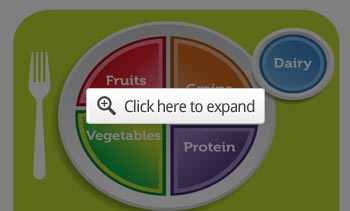
The food pyramid was replaced with “MyPlate” in 2011, which slightly downplayed grains as the most important dietary ingredient, making vegetables the largest “slice.” One of its most glaring problems with MyPlate is that it virtually removed all fats from the equation! In fact, except for a small portion of dairy, which is advised to be fat-free or low-fat, fats are missing entirely.
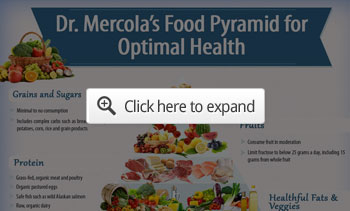
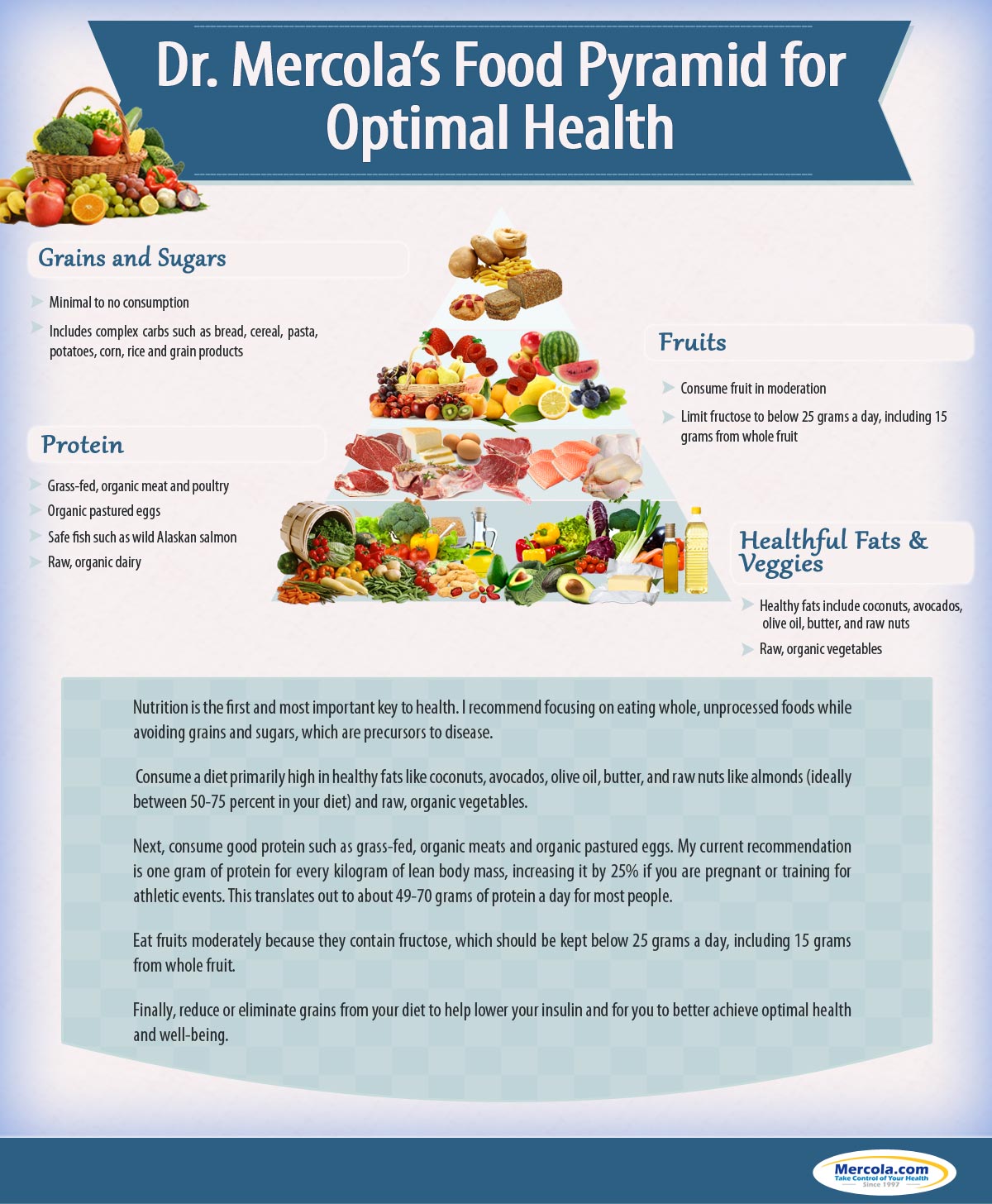
There is no mention of the importance of dietary fats, even the "politically correct" ones like the monounsaturated fats in olive oil and nuts, such as pecans (canola oil is also in this category, but I advise avoiding it and using coconut oil instead). Even one of the most critical of all fats is absent from the plate, namely animal-based omega-3 fats. Deficiency in this essential fat can cause or contribute to very serious health problems, both mental and physical, and may be a significant underlying factor of up to 96,000 premature deaths each year... For more information about omega-3s and the best sources of this fat, please review this previous article. In an effort to remedy this atrocious situation, I’ve created my own Food Pyramid for Optimal Health, which you can print out and share with your friends and family.

Studies Showing Saturated Fat is Not Associated with Increased Heart Disease Risk
As mentioned earlier, mounting scientific evidence supports saturated fat as a necessary part of a heart healthy diet, and firmly debunks the myth that saturated fat promotes heart disease. For example:
- In a 1992 editorial published in the Archives of Internal Medicine,6 Dr. William Castelli, a former director of the Framingham Heart study, stated:
"In Framingham, Mass., the more saturated fat one ate, the more cholesterol one ate, the more calories one ate, the lower the person’s serum cholesterol. The opposite of what… Keys et al would predict…We found that the people who ate the most cholesterol, ate the most saturated fat, ate the most calories, weighed the least and were the most physically active."
- A 2010 meta-analysis,7 which pooled data from 21 studies and included nearly 348,000 adults, found no difference in the risks of heart disease and stroke between people with the lowest and highest intakes of saturated fat.
- Another 2010 study published in the American Journal of Clinical Nutrition8 found that a reduction in saturated fat intake must be evaluated in the context of replacement by other macronutrients, such as carbohydrates.
When you replace saturated fat with a higher carbohydrate intake, particularly refined carbohydrate, you exacerbate insulin resistance and obesity, increase triglycerides and small LDL particles, and reduce beneficial HDL cholesterol. The authors state that dietary efforts to improve your cardiovascular disease risk should primarily emphasize the limitation of refined carbohydrate intake, and weight reduction.
How to Regain Your Health and Avoid Heart Disease
Remember, insulin- and leptin resistance are at the root of most chronic diseases, including heart disease. To safely and effectively reverse insulin and leptin resistance, you need to:
Remember, one of the most important fats your body needs for optimal health is animal-based omega-3. Deficiency in this essential fat can cause or contribute to very serious health problems, both mental and physical, and may be a significant underlying factor of up to 96,000 premature deaths each year. For more information about omega-3's and the best sources of this fat, please review this previous article. Besides animal-based omega-3 fats, other sources of healthy fats to add to your diet include:
- Avoid sugar, fructose, grains, and processed foods
- Eat a healthful diet of whole foods, ideally organic, and replace the grain carbs with:
- Large amounts of vegetables
- Low-to-moderate amount of high quality protein (think organically raised, pastured animals)
- As much highly quality healthful fat as you want (saturated and monosaturated). Most people need upwards of 50-70 percent fats in their diet for optimal health.
Avocados Butter made from raw grass-fed organic milk Raw dairy Organic pastured egg yolks Coconuts and coconut oil Unheated organic nut oils Raw Nuts, such as, almonds, pecans, macadamia, and seeds Grass-fed meats
Healthy Fat Tips to Live By
As reported by Medical News Today:9
“Dr. Malhotra urges doctors to "embrace prevention as well as treatment." Drugs can alleviate symptoms but they can't change the "pathophysiology," he says, and concludes: "It is time to bust the myth of the role of saturated fat in heart disease and wind back the harms of dietary advice that has contributed to obesity."The most effective prevention strategy you’ll likely ever find is your diet—the foods you do and do not eat every day. Dr. Malhotra recommends a Mediterranean-style diet, which has been shown to be three times more effective than statin drugs at reducing cardiovascular mortality.
A Mediterranean-style diet is basically a whole-food diet. And that is indeed key for any healthy diet. As Dr. Sanjay Gupta accurately points out in the featured video, the answer is to EAT REAL FOOD. This change alone will dramatically reduce the amount of refined sugar and processed fructose in your diet. It will also address the issue of healthful versus harmful fats in your diet. Believe me, you’d be hard-pressed to find a processed food containing healthful fat... Besides eliminating processed foods, the following tips can help ensure you’re eating the right fats for your health:
- Use organic butter made from raw grass-fed milk instead of margarines and vegetable oil spreads.
- Use coconut oil for cooking. It is far superior to any other cooking oil and is loaded with health benefits.
- Use olive oil COLD, drizzled over salad or fish, for example. It is not an ideal cooking oil as it is easily damaged by heat.
- Following my nutrition plan will teach you to focus on healthy whole foods instead of processed junk food.
- To round out your healthy fat intake, be sure to eat raw fats, such as those from avocados, raw dairy products, and olive oil, and also take a high-quality source of animal-based omega-3 fat, such as krill oil.
Subscribe to:
Posts (Atom)